sunnuntai 3. helmikuuta 2013

Runebergin päivän herkku – Runeberg's Tarts


"Torttujen alkuperän voi jäljittää Porvooseen, jonka vanhasta kaupungista sanotaankin löytyvän Suomen parhaat Runebergintortut.

Helmikuun 5. on Suomessa kansallisrunoilija Runebergin päivä, ja mikäpä parempi tapa juhlistaa sitä kuin leipomalla Runebergintorttuja, joita runoilijan kerrotaan mielellään nauttineen aamiaisella punssin seurassa. Omat kokemukseni tortuista ovat kaksijakoiset, johtuen luultavasti jostain nuorempana maistetusta maanantaituotteesta. Olin nimittäin 2000-luvun alkupuolelle asti tiukasti sitä mieltä että Runebergintortut ovat kuivia ja mauttomia kökkäreitä, joista on mahdoton pitää. Kun kerran sitten päätin maistaa tarjolla olevaa torttua uudemman kerran, huomasin leivonnaisen olevan jotain aivan muuta: pehmeä ja aromikas unelma, joka on kostutettu herkullisella punssilla. Olin koukussa ennen kuin ehdin torttua sanomaan.


Runebergintortut (6 kpl):

Taikina:
175 g voita
1 dl sokeria
1 dl fariinisokeria
2 kananmunaa
2 dl korppujauhoja
2 dl jauhettua mantelia
1 dl maitoa
2 tl leivinjauhetta
3 tl kardemummaa
2 dl vehnäjauhoja
17 tippaa karvasmanteliaromia

Kostutus:
2 dl vettä
2 rkl sokeria
4–5 rkl punssia tai tummaa rommia

Koristelu:
6 tl vadelmahilloa
1 dl tomusokeria
1/2 rkl vettä

Vaahdota pehmennyt rasva ja sokeri keskenään. Lisää joukkoon kananmunat voimakkaasti vatkaten. Sekoita taikinaan korppujauhot, mantelijauhe sekä maito. Sekoita keskenään vehnäjauhot, leivinjauhe sekä kardemumma ja lisää seos taikinaan. Mausta varoen karvasmanteliaromilla. Jaa taikina kuuteen Runebergintorttuvuokaan ja tasoita taikinan pinta. Paista torttuja 200-asteisessa uunissa 20–25 min. Anna torttujen jäähtyä hieman ennen niiden kumoamista vuoistaan. Kuumenna kattilassa vesi-sokeriseos, kunnes sokeri liukenee veteen. Lisää joukkoon punssi ja anna jäähtyä. Kasta torttuja molemmista päistään kostukkeessa 4–5 sekuntia. Aseta vetäytymään lautaselle ja valmista sillä aikaa sokerikuorrute sekoittamalla keskenään tomusokeri ja pieni määrä vettä. Kuorrutteesta kuuluu tulla paksua, jottei se valu. Aseta torttujen päälle noin teelusikallinen vadelmahilloa ja pursota hillon ympärille koristeeksi sokerikuorruterengas.
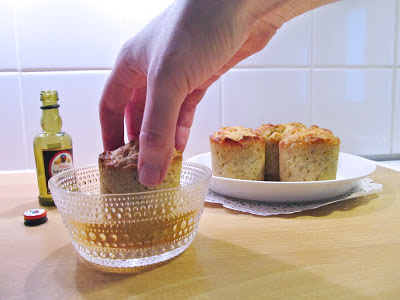


Runebergintortun ihanuus on sen erikoinen rakenne ja maku. Se eroaa muista leivonnaisista täysin. Korppujauhot tuovat leivonnaiseen rakeista ja miellyttävää tekstuuria ja karvasmanteliaromi tortun ominaismaun. Torttujen tarkasta alkuperästä on pientä epäselvyyttä. Toiset sanovat torttujen olevan rouva Fredrika Runebergin improvisoima luomus, toiset puolestaan uskovat rouvan muuntaneen torttuja kondiittorimestari Lars Asteniuksen kehittämästä reseptistä. Niin tai näin, torttujen alkuperän voi jäljittää Porvooseen, jonka vanhasta kaupungista sanotaankin löytyvän Suomen parhaat Runebergintortut. Nykypäivänä tortuista on monenlaisia versioita, eikä niille ole yhtä oikeaa reseptiä. Jotkut nauttivat tortun kostuttamatta, toiset taas ilman karvasmanteliaromia. Omasta mielestäni kuitenkin karvasmanteliaromi tekee tortusta Runebergintortun, ja se ei olisi oikeanlainen ilman punssikostuketta. Alkuperäisten Runebergintorttujen hillokoristeen kerrotaan olleen omenainen, mutta vadelmahilloinen versio taitaa nykyisin olla korvannut sen täysin. Nauti Runebergintorttu hyvän kahvin tai punssin kera!


*  *  *


On February 5th Finland celebrates its national poet Johan Ludvig Runeberg. There’s no better way for celebration than baking Runeberg’s tarts that are claimed to be the poet’s favourites enjoyed with punch over breakfast table. My personal experiences of the tarts are twofold, probably due to some poor individual product decades ago. Until the early 2000s I was convinced that Runeberg’s tarts are dry and tasteless lumps that are impossible to like. Until, along came the day when I decided to give the pastry another go and found them to be quite the opposite; they are in fact soft and fragrant dreamies, moistened with delicious punch. I was hooked before I could say ‘tart’.


Runeberg’s Tarts (6 pieces):

Batter:
175 g (6 1/4 oz) butter
1 dl (1/2 cup) white sugar
1 dl (1/3 cup) brown sugar
2 eggs
2 dl (2/3 cup) breadcrumbs
2 dl (1 cup) powdered almond
1 dl (1/2 cup) milk
2 tsp. baking powder
3 tsp. cardamom
2 dl (1 cup) plain flour
17 drops bitter almond aroma

Moistening:
2 dl (1 cup) water
2 tbsp. sugar
4–5 tbsp. punch or dark rum

Decoration:
6 tsp. raspberry jam
1 dl (1/2 cup) powdered sugar
1/2 tbsp. water

Mix the soft butter and sugar into light foam. Add eggs while mixing strongly. Add the breadcrumbs, powdered almond and milk and mix carefully. Mix together plain flour, baking flour and cardamom and add into the batter. Season the batter with a few drops of bitter almond aroma. Divide the batter into high muffin tins and even out the top. Bake the tarts for 20–25 minutes in 200 C / 390 F. Let the pastries cool off a bit before removing them from tin. Meanwhile, heat up water and sugar in a kettle until the sugar dissolves. Add punch and let cool down. Dip both ends of the tarts into the liquid counting 4–5 seconds. Place onto a plate to rest while preparing the icing by mixing powdered sugar and a small amount of water together. The icing is supposed to be very thick so it won’t run down the pastry. Place a dab of raspberry jam over each tart and extrude a ring of icing around it.


The great thing about Runeberg’s tarts is their characteristic structure and taste. The breadcrumbs give the pastry a pleasant texture, and the bitter almond its distinctive flavour. The shape of Runeberg's tarts is a bit different from normal muffins: the tarts are usually baked in a specific tin that is higher and has straight edges. Naturally you can simply use a normal muffin tin; you'll probably just end up with a couple of extra tarts. 

There’s no certainty of who created the original Runeberg’s Tart. Some say Mrs. Fredrika Runeberg improvised the recipe, but some will tell you the pastry was originally created by a confectionery master Lars Astenius. This or that, the origin can be tracked to Porvoo where Runeberg lived. It’s told that the best Runeberg’s tarts can be found in the old part of Porvoo. Today there are many variations of the delicious pastry, and there’s no one right recipe, either. Some enjoy it dry, some without bitter almond. I find that to make a true Runeberg’s tart you need bitter almond, and the pastry wouldn’t be the same without the moistening punch. It is told that originally the jam decoration on top was apple, but the raspberry version has taken over these days. Enjoy your own tarts with quality coffee or punch!


tiistai 29. tammikuuta 2013

Makkarakeitto – Sausage Soup


"Yksinkertaisuus ei ole mikään huono asia.

Tällä viikolla olen todella nauttinut hyvin yksinkertaisista arkiruoista. Tänään halusin päästä helpolla ja valmistin perinteisen makkarakeiton. Vaikka useimmiten päädyn käyttämään nakkeja, halusin tällä kertaa pitkästä aikaa tehdä sopan HK:n sinisestä lenkistä, suomalaisen makkaran klassikosta. Se onkin hyvin maukasta perus ruokamakkaraa, joka sopii loistavasti esimerkiksi juuri keittoihin. Maistaessani makkaraa pitkästä aikaa huomasinkin sen olevan melko suolaista, joten suosittelen käyttämään suolaa keitossa harkitusti.


Makkarakeitto:

2 l vettä
2 porkkanaa
150 g lanttua
2–3 perunaa
500 g ruokamakkaraa
1/2 purjo
ruokaöljyä
10 maustepippuria
1 laakerinlehti
suolaa
persiljaa
lehtiselleriä

Pese ja leikkaa porkkanat, lanttu ja perunat. Keitä ensin porkkanaa ja lanttua n. 10 minuuttia ennen kuin lisäät joukkoon perunat. Makkarasta riippuen kuori se tarvittaessa ja leikkaa paloiksi. Ruskista makkarapaloja hetki pannulla. Pese purjo huolellisesti ja leikkaa se. Kuullota purjoa hetki pannulla pienessä määrässä öljyä. Kun juurekset alkavat vähitellen kypsyä, lisää keittoon makkarat, purjo sekä mausteet. Käytä suolaa varoen riippuen makkaran suolaisuusasteesta. Keitä keittoa kunnes kaikki juurekset ovat kypsiä.


Suomalaiset keitot ovat aina olleet melko yksinkertaisia. Liemi on useimmiten ollut kirkasta ja ainekset koostuneet yksinkertaisista juureksista ja lihasta. Sosekeitot ja suurustetut keitot yleistyivät vasta myöhemmin. Mutta yksinkertaisuus ei ole mikään huono asia. Itse pidän eniten juuri yksinkertaisista keitoista mietoine makuineen. Selaillessani makkarakeiton reseptejä internetistä ihmettelin sitä, että useimmissa niistä käytettiin lihaliemikuutioita tai fondia. Keitto on kuitenkin aivan järisyttävän helppo valmistaa ilman kasaan puristettuja mausteita ja aromivahventeita. Ainoat lisäaineet tähän keittoon tulivat makkarasta, jossa kyllä siinäkin on E-koodeja aivan riittävästi.


*  *  *


My week has truly been about basic, everyday Finnish food. Today I wanted to get off easy and decided to cook a basic sausage soup. You can just as easily prepare a soup using almost any kind of sausages, but the most traditional types in Finland are either frankfurters or basic sausages containing pork and cow meat. I usually prepare soup with frankfurters, but today I wanted to use the classic Finnish sausage called sininen lenkki (straight translation “blue loop”, but the word lenkki comes from lenkkimakkara, which means a type of sausage) made by company called HK. For some reason it has become the classic of all sausages in Finland. And it is very nice, basic sausage great in soups and such. It is a bit salty, though, so I advice to go easy on the salt.


Sausage Soup:

2 l (4 pt) water
2 carrots
150 g (5 oz) rutabaga
2–3 potatoes
500 g (17 oz) Finnish sausage (HK Sininen lenkki)
1/2 leek
cooking oil
10 pimentos
1 laurel leaf
salt
parsley
celery

Wash and cut the potatoes, carrots and rutabaga. Place rutabaga and carrot pieces in a large kettle and cook about ten minutes before adding the potato pieces. Depending on the sausage, peel it if needed and then cut in smaller pieces. Fry the sausage pieces quickly on a frying pan. Wash and cut the leek and sweat it on a pan for a while in a small amount of cooking oil. When the root vegetables are almost done, add sausage and leek in the kettle along with the seasonings. Use salt carefully depending on the saltiness of the sausage. Cook until all the vegetables are well done.


The Finnish soups have always been pretty simple. The broth is usually clear and the ingredients consist of simple root vegetables and meat. Pureed and thickened soups have become more common later on. But simplicity is not bad thing at all. I myself prefer the simple soups with mild flavors. As I was browsing through web pages to see recipes for sausage soup I was surprised that in most recipes people used stock cubes. Soup is ridiculously easy to season even without compressed cubes of spices and monosodium glutamate. The only food additives in this dish came from the sausage, which contains well over enough of them, by the way.


lauantai 26. tammikuuta 2013

Makaronilaatikko – Macaroni Casserole


"Tuntuu hölmöltä, mutten aikaisemmin ole käsittänyt sitä, kuinka paljon luomutuotteiden tuotantoa säätelevillä asetuksilla on vaikutusta tuotantoeläinten elämän laatuun.

Nykyajan käsite lohturuoasta sopii hyvin makaronilaatikkoon: se on helppo valmistaa ja vielä helpompi syödä, ja tätä kalorikasta herkkua nauttiessa voi upottautua vanhoihin mielikuviin kuumasta, ketsupilla kuorrutetusta makaronilaatikosta. Vaikka nykyisin makaronilaatikon resepteissä näyttää usein käytettävän juustoa, perinteisessä versiossa sitä ei ole ollut. Itse asiassa, jos tarkkoja ollaan, niin ilmestyessään suomalaisiin ruokapöytiin 1900-luvun alkupuoliskolla makaronilaatikossa ei ollut lihaakaan, vaan se tarjottiin perunan kaltaisena kylkiäisenä muun ruoan kanssa. Myöhemmin liha ilmestyi laatikkoon ja niin syntyi tänä päivänä yleisemmin tunnettu versio makaronilaatikosta. Nykyään se on yksi suosituimmista suomalaisista perinneruoista.


Makaronilaatikko:

7 dl tummaa makaronia
ruokaöljyä
1–2 sipulia
400 g jauhelihaa
1 tl mustapippuria
1 tl suolaa
1 tl valkopippuria
1–2 valkosipulin kynttä
8 dl maitoa
3 kananmunaa
(ruiskorppujauhoja)

Keitä makaronit melkein kypsiksi pussin ohjeiden mukaisesti. Kuullota pilkottu sipuli pienessä määrässä öljyä. Ruskista jauheliha pannulla ja mausta se ripauksella suolaa ja mustapippuria. Sekoita makaroni, sipuli ja jauheliha keskenään ja kaada suureen uunivuokaan. Sekoita keskenään maito ja kananmunat ja lisää seokseen mausteet. Kaada vuokaan niin, että makaroni-jauhelihaseos peittyy. Halutessasi ripottele pinnalle korppujauhoja, jotta saat laatikolle erityisen rapean pinnan. Paista 200-asteisessa uunissa noin tunti. Tarjoile hyvän ketsupin kanssa.


Vuosien myötä makaronilaatikosta on tietysti syntynyt uudistettujakin versioita. Siinä, missä perinteisemmässä versiossa ainekset ovat hyvin yksinkertaiset, modernissa makaronilaatikossa voi olla kanaa, tofua, runsaasti vihanneksia ja tulisia mausteita. Myös makea versio on ollut joissain paikoin Suomea yleinen. Makeassa makaronilaatikossa munamaitoseos makeutetaan sokerilla ja liha sekä sipuli jätetään pois. Vaikka tämä saattaa kuulostaa melko luotaantyöntävältä ajatukselta, on ruoka ilmeisesti monen mielestä sangen herkullista. Itse taidan kuitenkin pitäytyä tavanomaisemmassa versiossa.


MARGINAALISSA:
Muutama sana eläintuotteista: lainasin jonkun aikaa sitten Elina Lappalaisen kirjan Syötäväksi kasvatetut, joka kertoo eläintuotannosta Suomessa. Olen jo jonkun aikaa halunnut oppia aiheesta enemmän, ja kyseinen kirja tarjoaa mielestäni hyvin realistisen mutta silti neutraalin kuvan siitä, millaista tuotantolaitoksissa on. Täytyy sanoa, että tämän myötä kunnioitukseni luomutuotteita kohtaan on kasvanut huimasti. Tuntuu hölmöltä, mutten aikaisemmin ole käsittänyt sitä, kuinka paljon luomutuotteiden tuotantoa säätelevillä asetuksilla on vaikutusta tuotantoeläinten elämän laatuun. Kirjasta on tullut niin paljon minulle uutta tietoa, etten voi alkaa avaamaan sitä kaikkea tässä, joten suosittelenkin lämpimästi lukemaan teoksen läpi. Itse en enää koskaan tule ostamaan niin sanottuja virikehäkkimunia. Käyttämäni munat tulevat vastedes olemaan luomua. Lisäksi tulen miettimään kahdesti ennen kuin ostan porsaan lihaa, kun luin ja näin kuvia tuotannossa yleisesti käytössä olevista emakkohäkeistä. Vaikka tuotannon saisi täydellisesti vastaamaan eläinten lajityypillistä käyttäytymistä, jäljelle jää silti kysymys, onko eettisesti oikein kasvattaa eläintä ainoastaan, jotta se tulisi syödyksi. Kysymyksestä tulee vaikeampi ajatella kun lukee esimerkiksi emakoista, jotka viettävät koko elämänsä joko tiineenä tai imettäen, tai vasikoista, jotka vieroitetaan emostaan pian syntymänsä jälkeen ja joille juotetaan maidon korviketta, jotta kaikki lehmän maito saataisiin tuottamaan. Kyseessä ei ole helpot kysymykset, mutta niitä kannattaa pohtia vaikkei eläintuotteista olisikaan luopumassa.


*  *  *


The modern concept of “comfort food” fits well in macaroni casserole, the Finnish version of macaroni and cheese. It's easy to prepare, even simpler to eat, and when enjoying this meal rich in calories, you can go back to your own childhood and the warm memories of hot casserole served with loads of ketchup. The traditional Finnish version does not include cheese but grounded meat. To be precise, when macaroni casserole first appeared in the Finnish dinner tables in the early 1900’s, it didn’t even contain that. The idea was quite simply to mix macaroni with milk and eggs, bake it in the oven and serve as a side dish like potatoes. Later on the meat got in the casserole, and that’s how the macaroni casserole we know today was born. Today it’s one of the most popular traditional dishes in Finland.


Finnish Macaroni Casserole:

7 dl (3 cups) dark macaroni
oil
1–2 onions
400 g (14 oz) ground meat
1 tsp. black pepper
1 tsp. salt
1 tsp. white pepper
1–2 cloves of garlic
8 dl (3 1/3 cups) milk
3 eggs
(rye bread crumbs)

Boil the macaroni until almost done as advised in the package. Sweat the chopped onions in a small amount of oil. Brown the ground meat and season it with a hint of salt and black pepper. Mix together the macaroni, onions and ground meat and place in a large, deep oven tray. Mix together milk and eggs and add the seasonings into the mixture. Pour over the casserole to cover the macaroni mixture. If you like an extra crispy surface, sprinkle some bread crumbs over the casserole. Bake for one hour in 200 C / 390 F. Serve with ketchup.


Along the years people have of course created many versions of the casserole. The traditional version contains a few simple ingredients and seasonings, but the modern versions are often prepared with chicken, tofu, vegetables and hot spices. There’s also a sweet version that has been around for decades. In sweet macaroni casserole the egg and milk mixture is sweetened with sugar and the meat and onion is left out. As aversive as it may sound, many people consider it to be quite delicious. I however believe that I’ll stick with the good old version.


OVER THE EDGE:
A few words about animal products: some time ago I started reading a book about the animal product industry in Finland. The book is written by Elina Lappalainen and it’s called Syötäväksi kasvatetut (Raised to be eaten). I’ve wanted to learn more about this topic for some while now, and the book gives a very realistic yet neutral picture of the industry. And I have to tell you: after reading it I have a whole new respect for organic products. Silly me, I never came to think that the regulations in organic food production have such an effect on the overall quality of life for the animals. There are too many things I’ve learned from this book to tell them all here, so I strongly recommend, if you have skills in Finnish, to read the book or find one in English that would describe the every day production line of eggs, milk and meat. After reading the book I will never buy eggs that have “furnished cages” label on them. Instead, I will be using organic eggs. Other than that, I will think twice before buying pork, after seeing the pictures of the sow cages used commonly in pork production. Even if the production would support the natural behaviour for each species, there would still be the ethical question left of wether it is right to raise animals just so they can be eaten. The question is even more difficult when reading about sows, for instance, that spend all their lives either pregnant or nursing, or the calves, that are separated shortly after birth and then fed with milk substitute to gain all possible profit from the dam’s milk. These are not easy questions, but it’s good to consider them even if you’re not thinking about giving up animal products.


maanantai 21. tammikuuta 2013

Kaalipiirakka – Cabbage Pie


"Jauhoseinämässä on täytynyt olla pari koloa, sillä vesi karkasi syvennyksestään ja lähti iloisesti leviämään eri suuntiin työtasoa.

Valmistin jonkin aikaa sitten kaalikeittoa, josta minulla jäi yli puolet ostamastani noin kilon kokoisesta kaalista. Kypsensin tuolloin kaalia paistinpannulla hetken ja pakastin sen myöhempää käyttöä varten. Pari päivää sitten kaali ponnahti jälleen tietoisuuteeni ja päätin hyödyntää sen. Loistava kohde oli tietenkin kaalipiirakka, jossa käytetään herkullista voitaikinapohjaa. Koko oli vain pulma. Kaalia ei ollut riittävästi suuren piirakan valmistamiseen, joten kaupasta ostettava voitaikinalevy olisi ollut liian suuri käytettäväksi. Muutenkin halusin valmistaa pohjan itse. Päädyin hyödyntämään pohjan ohjeena hyllystäni löytyvää Joka kodin leivontakirjaa (Gummerus 2004), jossa on resepti nopealle voitaikinalle. Jos haluat itse tehdystä taikinasta oikein lehtevän, taita taikina reseptin ohjeiden lisäksi vielä ylimääräisen kerran kolmin kerroin.


Nopea voitaikina:

3 1/2 dl vehnäjauhoja
200 g voita
ripaus suolaa
1 1/4 dl vettä

Mittaa jauhot työtasolle ja tee keon keskelle syvennys. Aseta syvennyksen reunoille pieneksi kuutioitu voi ja ripottele päälle hieman jauhoja. Lisää syvennykseen suola ja vesi. Sekoita veteen mahdollisimman paljon jauhoja ja sekoita sitten kaikki ainekset nopeasti keskenään. Vaivaa taikina tasaiseksi. Kauli taikina suorakulmaiseksi levyksi. Taita se kolmeen osaan: ensin kolmannes levyn keskelle, sitten toinen kolmannes päälle. Anna taikinan jämäköityä jääkaapissa 20 minuuttia. Kauli se sitten uudelleen ja taita neljään osaan: ensin neljännes levyn keskelle, sitten toinen neljännes keskelle ja lopulta keskeltä kaksinkerroin. Anna jälleen levätä jääkaapissa 20 minuuttia. Kauli  lopulta taikina haluamaasi muotoon.


Olen aikaisemmin valmistanut muun tyyppistä taikinaa samalla tavalla työtason päällä, mutta jostain syystä tällä kertaa asiat eivät sujuneet aivan mutkattomasti. Jauhoseinämässä on täytynyt olla pari koloa, sillä vesi karkasi syvennyksestään ja lähti iloisesti leviämään eri suuntiin työtasoa. Huidoin ympäriinsä kuin hullu koittaen kasata veden takaisin keskelle ja sekoittaa siihen jauhoja. Sotku oli melkoinen. Näin ollen itse taikinan valmistuksesta ei ole nyt hyviä ohjekuvia. Jos siis päätät valmistaa taikinan itse, varmista, ettei jauhossa ole kolosia, joista vesi pääsee karkaamaan – tai vaihtoehtoisesti valmista taikina kulhossa.


Kaalipiirakka:

yllä oleva voitaikinapohja 
tai 1/2 kaupan pohja

Täyte:
500 g valkokaalia
1 rkl ruokaöljyä
1–2 sipulia
250 g jauhelihaa
2 tomaattia
suolaa
mustapippuria
1 valkosipulin kynsi
(sinihomejuustoa)
200 g kermaviiliä
2 kananmunaa

Leikkaa valkokaali suikaleiksi ja kypsennä sitä hetki öljyssä paistinpannulla. Hienonna ja kuullota sipuli pannulla sekä ruskista ja mausta jauheliha. Paloittele myös tomaatit. Aseta piirasvuoan (halkaisija n. 30 cm) pohjalle sopivan muotoiseksi kaulittu voitaikina pohja. Taikinaa tulisi ylettyä myös vuoan reunoille. Ripottele päälle ainekset ja mausteet. Sekoita lopulta keskenään kermaviili sekä kananmunat ja kaada piiraan päälle. Paista 200-asteisessa uunissa noin 30 minuuttia.


Kaalipiirakka on monipuolinen herkku. Siihen sopivia aineksia löytyy varmasti kymmenittäin. Käytin tomaatteja siksi, että niitä löytyy myös kotimaisina, mutta myös paprika on erittäin hyvä vaihtoehto. Sinihome juusto löysi tiensä piiraaseen siksi, että sitä oli vielä jääkaapissa jäljellä ja parasta ennen päiväys oli ehtinyt mennä jo melkein pari viikkoa sitten. Sinihomejuusto toimiikin erinomaisesti kaalin kanssa, mutta jos et ole sen ystävä, voit yksinkertaisesti jättää sen pois joukosta.


*  *  *


Some time ago I prepared cabbage soup. I had bought a large white cabbage for the meal, but it turned out to be too much; I decided to fry it gently on a pan and freeze it for later use. A couple of days ago I came to think of the cabbage and decided to bake a pie with delicious butter dough. I just didn’t have enough cabbage for a large pie that would consume a large piece of ready-made butter dough. Besides, I wanted to bake the dough myself. I therefore decided to use a recipe for “Quick butter dough” in one of my cookbooks (Joka kodin leivontakirja, Gummerus 2004). If you want your dough to be extra leafy, you can fold it one more time in three layers as described in the recipe.


Quick Butter Dough:

3 1/2 dl (1 1/2 cups) plain flour
200 g (7 oz) butter
a hint of salt
1 1/4 dl  (1/2 cup) water

Measure the flour onto a table and form a hole in the middle. Place small butter cubes on the edges of the hole and sprinkle some flour over them. Add salt and water in the hole. Mix as much flour as you can with the water, and then quickly mix all the ingredients together. Knead to form smooth dough. Roll the dough into a square and fold it in three layers: first a third of the dough into the middle of the square, then the other third on top. Place in the fridge for 20 minutes. Roll the dough into a square again and fold it in four layers: first a fourth in the middle, then the other fourth in the middle and finally the two sides together. Place in the fridge for 20 more minutes. Then roll the dough into the shape you want.


Previously I have prepared other kind of dough with a similar style, on a table top. Somehow this time it didn’t go too well: my wall of bleached flour must have had a couple of holes in it, because the water fled and ran into different directions on the board. I was flailing all over to collect the water back and quickly mix it with the flour. That’s why I don’t have many pictures to show how the dough is made. So, make sure the water can’t escape the hole or prepare the dough in a bowl.


Cabbage Pie:

butter dough as above 
or 250 g (9 oz) ready-made butter dough

Filling:
500 g (18 oz) white cabbage
1 tbsp. oil
1–2 onion
250 g (9 oz) ground beef
2 tomatoes
salt
black pepper
1 garlic clove
(blue cheese)
200 g (7 oz) sour cream
2 eggs

Cut the white cabbage and fry it gently on a pan with some oil. Chop the onion and sauté on a pan. Brown and season the ground beef. Chop the tomatoes, too. Place the rolled dough on a pie tray (diameter about 30 cm / 12 inch) so that also the edges are covered. Add the ingredients and seasonings. Finally, mix together with sour cream and eggs and pour on top of the pie. Bake for about 30 minutes in 200 C / 390 F.


Cabbage pie is a versatile delicacy. There are tens of ingredients that work well with it. I wanted to use tomatoes, because they are also grown in Finland, but red paprika is just delicious in the pie. I used some blue cheese in the pie because we had some of it left in the fridge and the expiration date (“best before”, that is) was a couple of weeks ago. Blue cheese works very well with the cabbage, but if you don’t like it, simply leave it out.


sunnuntai 13. tammikuuta 2013

Leipä miehen tiellä pitää – Simple and Delicious Tin Bread


"Sekoitteluni ovat enemmänkin eksperimentaalisia kuin täydellisyyttä tavoittelevia.

Minun on jo kauan tehnyt mieli tuoretta leipää. En kuitenkaan edelleenkään ole saanut suurta inspiraatiota lähteä leipomaan kunnollista ruisleipää tai kovaohrastakaan, joten olen tyytynyt haikailemaan kauraisen vuokaleivän perään. Eilen illalla  istuin katselemassa televisiota ja väsyneenä katsahdin kelloon: se oli vasta yhdeksän. Päätin, että ruudun ääressä möllöttämisen sijaan käyn ajoissa nukkumaan ja nousen kuudelta tehdäkseni sen, millä jokaisen sunnuntain kuuluu alkaa. Aamukahvin jälkeen oli ihana rauhassa alkaa puuhastelemaan kuiva-ainekaapin äärellä ja miettimään, millaisia aineksia vuokaleivässä käyttäisin. Etenkin vuokaa käytettäessä leivän valmistuksessa ei tarvitse olla mitenkään tarkka. Taikinan kuuluu jäädä pehmeäksi ja leipä saa puolestani olla vähän murenevaakin. Niin ollen käytän mielelläni karkeampia ja tuntuvampia aineksia kuin vehnäjauhoja, joita tosin myös tarvitaan edes jossain muodossa, jotta leivässä olisi sitkoakin.


Kaurainen vuokaleipä:

5 dl vettä
25 g hiivaa
1 1/2 tl suolaa
1 rkl siirappia
3 rkl öljyä
3 dl kaurahiutaleita
1 dl ohrajauhoja
1 dl ruisjauhoja
1 dl grahamjauhoja
4 dl vehnäjauhoja

Lämmitä vesi kädenlämpöiseksi ja murenna sekaan hiiva. Sekoita joukkoon suola, siirappi sekä öljy. Lisää muut ainekset ja sekoita löysäksi taikinaksi. Voitele 1 1/2 litran vetoinen vuoka ja kaada siihen taikina. Ripottele halutessasi pinnalle kaurahiutaleita. Anna nousta liinan alla tunnin. Paista 200-asteisen uunin alatasolla 30–40 minuuttia.


Jyväinen vuokaleipä:

5 dl vettä
25 g hiivaa
1 1/2 tl suolaa
1 rkl siirappia
3 rkl öljyä
1 dl auringonkukan siemeniä
1 dl kurpitsansiemeniä
3 rkl pellavansiemenrouhetta
4 dl sämpylä- tai hiivaleipäjauhoja
1 dl ruisjauhoja
2 dl grahamjauhoja

Lämmitä vesi kädenlämpöiseksi ja murenna sekaan hiiva. Sekoita joukkoon suola, siirappi sekä öljy. Lisää muut ainekset ja sekoita löysäksi taikinaksi. Voitele 1 1/2 litran vetoinen vuoka ja kaada siihen taikina. Ripottele halutessasi pinnalle siemeniä. Anna nousta liinan alla tunnin. Paista 200-asteisen uunin alatasolla 30–40 minuuttia.


Näissä leivissä käytin vapaasti useita erilaisia jauhoja, jotta leivistä tulisi tukevia ja rouheisia. Jauhotyyppien määrä ei ole mikään itseisarvo, vaan yhtä lailla laadukasta leipää tulee parista yksinkertaisesta aineksesta. Sekoitteluni ovat enemmänkin eksperimentaalisia kuin täydellisyyttä tavoittelevia. Voit siis hyvin yksinkertaistaa kauraleivän reseptiä jättämällä pois ruis- ja grahamjauhot ja lisäämällä muiden jauhojen määrää, tai jyväleivän kohdalla karsia taikinasta vaikka sekä ruis- että grahamjauhot ja hyödyntää vain sämpyläjauhoja. Jos teet sekaleipää, ruisjauho on loistava lisä, mutta se tekee taikinasta myös raskaampaa. Niinpä sitä kannattaa käyttää maltillisesti, jos haeskelee kuohkeutta. Kuten mainitsinkin, vehnäjauhot ovat pehmeän leivän taikinassa tarpeen, mutta itse käytän niitä mahdollisimman vähän. Vehnähöttö ärsyttää minua, koska miellän sen pullaksi, en leiväksi. Olin hyvin tyytyväinen näiden leipien makuun ja rakenteeseen. Kummatkin niistä ovat melko rouheita. Toisen päällä olevat siemenet tuovat makuun mukavaa paahteisuutta, toisen kaura on puolestaan maultaan miellyttävän pehmeä. Kummatkin leivät ovat myös hyvin täyttäviä, mikä on vain hyvä asia: siitä tunnistaa oikean leivän!

Kannattaakin tarkistaa, millaiset ravintoarvot kullakin jauholla on. Tässä lyhyt yhteenveto yleisimmin käyttämieni jauhojen proteiini- ja kuitupitoisuuksista (per 100 g):

puolikarkea vehnäjauho: proteiinia 12 g, kuitua 3,8 g
hiivaleipäjauho: proteiinia 14 g, kuitua 5,5 g
sämpyläjauho: proteiinia 12 g, kuitua 8,2 g
ohrajauho: proteiinia 10 g, kuitua 10,5 g
grahamjauho: proteiinia 13,8 g, kuitua 12,5 g
ruisjauho: proteiinia 10 g, kuitua 20 g

Sämpyläjauhot ovat minulle siksi mieluisia, että niissä on hyvät leivontaominaisuudet mutta ne ovat tavallisia vehnäjauhoja runsaskuituisempia, sillä niissä käytetään vehnäjauhojen lisäksi täysjyvävehnää. Hiivaleipäjauhoissa etuna on runsas proteiinin määrä, joka on seurausta siitä, että aineksena käytetään vehnäjyvän ravintorikkain osa kuoren alta. Ohrajauhot ovat myös täysjyvästä jauhettuja, ja ne ovatkin hyvin kuitupitoisia. Grahamjauhot ovat täysjyvävehnää ja siksi karkeampia rakenteeltaan, mutta niiden kuitupitoisuus on loistava. Sokerina pohjalla on tietenkin suosikkini ruis, jonka kuitupitoisuus peittoaa kaikki kilpakumppanit. Ei muuta kuin kokeilemaan ja lämpimäisillä herkuttelemaan, sillä vuokaleipää osaa leipoa kuka tahansa.


*  *  *


I’ve been wanting freshly baked bread for a long time now. Still I’m not ready to take on a challenge like baking real rye bread, or even proper barley bread, so I’ve been planning to keep it simple and bake the bread in a tin. Last night I was sitting and just watching TV and feeling very tired I checked the time. It was 9 PM. I decided that instead of wasting my evening in front of the telly, I would go to bed early and start my Sunday morning the way it should always start. I woke up at 6 AM, had some coffee and started planning the ingredients I’d like to use in the dough. Especially when using a tin, there’s no strict limit to baking bread. The dough is supposed to be loose, and I don’t even mind if the bread is a bit crumbly. I like using rough flour, even though plain flour is also needed at least in some form, so that there would be viscosity in the dough.


Tin Bread with Oat:

5 dl (2 cups) water
25 g (1 oz) baker’s yeast
1 1/2 tsp. salt
1 tbsp. syrup
3 tbsp. oil
3 dl (1 1/3 cups) oat flakes
1 dl (1/2 cup) barley flour
1 dl (1/2 cup) rye flour
1 dl (1/2 cup) graham flour
4 dl (1 2/3 cup) plain flour

Warm up the water to body temperature and mix together with the baker’s yeast. Add salt, syrup and oil. Add the rest of the ingredients and mix to form soft dough. Butter a tin (about 1 1/2 litres / 4 pt) and place the dough into it. If you want, you can sprinkle some oat flakes on top. Let rise in warm spot under a cloth for an hour. Bake for 30–40 minutes in 200 C / 390 F.


Tin Bread with Seeds:

5 dl (2 cups) water
25 g (1 oz) baker’s yeast
1 1/2 tsp. salt
1 tbsp. syrup
3 tbsp. oil
1 dl (1/2 cup) sunflower seeds
1 dl  (1/2 cup) pumpkin seeds
3 tbsp. grated linseed
4 dl (1 2/3 cups) dark wheat flour
1 dl (1/2 cup) rye flour
2 dl (3/4 cup) graham flour

Warm up the water to body temperature and mix together with the baker’s yeast. Add salt, syrup and oil. Add the rest of the ingredients and mix to form soft dough. Butter a tin (about 1 1/2 litres / 4 pt) and place the dough into it. If you want, you can sprinkle some seeds on top. Let rise in warm spot under a cloth for an hour. Bake for 30–40 minutes in 200 C / 390 F.


I used various types of flour in these tin breads to make them sturdy. The amount of different flour used in the dough is not that important; you can bake delicious bread by using just a couple of good quality flour types. So, if you like, you can simplify the Oat Bread recipe by leaving out the rye and graham flour, and the Bread with Seeds can have only dark wheat flour in it, if you like. When baking mixed grain bread, I find that rye flour is a great ingredient, but it quite heavy. If you like your bread fluffy and soft, be careful not to use too much rye flour. As I mentioned, plain flour is needed if you want to bake soft bread, but I tend to use it as little as possible. I don’t like bread that's too  fluffy, to me it’s not bread. I really enjoyed the taste and texture of these two breads. They felt quite rough, and both of them had a nice flavour. The seeds on top of the bread give it a sort of roasted flavour, and the oat tastes very soft and pleasant. Both of the breads are also very filling, which is a good thing in my opinion: that's how you can tell real bread from fluff.

I advice to check the nutrient values with each flour you have at hand. Here’s a short summary of some flour types sold at least in Finland:

Plain flour: 12 % protein, 3,8 % dietary fibre
Dark wheat flour: 14 % protein, 5,5 % dietary fibre
Barley flour: 10 % protein, 10,5 % dietary fibre
Graham flour: 13,8 % protein, 12,5 % dietary fibre
Rye flour: 10 % protein, 20 % dietary fibre

I like using dark wheat flour when baking bread. It has a lot of protein, because it’s made from the most nutritious part of the wheat grain, right under the skin. Barley flour is also wholegrain and it contains a lot of dietary fibre. Graham flour is wholegrain wheat and is harder than plain flour, but rich in fibre. Last but not least, there’s my favourite, rye flour that has the highest percentage of dietary fibre. Tin bread is the simplest ever, so go ahead and try out your own favourite mixture and seasonings.


lauantai 12. tammikuuta 2013

Gluteenittomat veriletut – Gluten Free Blood Pancakes


"Letut on helppo valmistaa gluteenittomina tattarijauhoista, mutta yhtä lailla sama resepti toimii ohra-, ruis- ja vehnäjauhojenkin kanssa.

Veren käyttö ruoassa on aihe, joka jakaa ihmisiä kahtia. Monet uskonnot kieltävät veren käytön, toisaalla verellä on suuri merkitys niin yleisesti kulttuurissa kuin ruoanvalmistuksessakin. Siitä saa paljon rautaa ja muita ravintoaineita, mutta toisekseen on sen käyttö myös perusteltua teuraseläimen mahdollisimman tarkalla hyödyntämisellä. Veri ruuassa on joillekin ihmisille ehdoton ei sen herättämien mielikuvien ja myös koostumuksensa vuoksi: esimerkiksi veriletut ovat tavallisia ohukaisia huokoisempia ja jämäkämpiä. Itsessään veren makua ei tarvitse tietenkään pelätä, samalla tavoin kuin mustassa makkarassakaan veri ei maistu vereltä. Suomessa ja muissa pohjoismaissa verta on käytetty perinteisesti ruoka-aineena, mutta einesruokien määrän lisäännyttyä moni ryhtyi ostamaan veriohukaiset valmiina kaupasta. Parhaimmillaan veriletut kuitenkin ovat vastapaistettuina ja kostean muhevina.


Gluteenittomat veriletut (8:lle):

5 dl naudan verta
5 dl gluteenitonta olutta, maitoa tai vettä
5 dl tattarijauhoja
1 suuri sipuli
2 rkl voisulaa
1 valkosipulin kynsi
1 1/2 tl suolaa
1 1/2 tl meiramia
valkopippuria

Sulata naudan verta 12 tuntia jääkaappilämmössä. Kuori ja hienonna sipuli, kuullota se pannulla ja anna jäähtyä. Vatkaa veri kuohkeammaksi ja lisää joukkoon voimakkaasti sekoittaen myös olut. Purista valkosipuli ja sekoita taikinaan muut ainekset. Anna taikinan turvota jääkaapissa 1/2–1 h. Paista veriletut valurautapannulla keskilämmöllä. Tarjoa keitettyjen perunoiden, maitokastikkeen ja puolukkasurvoksen kera.


Vaikka olenkin itse tottunut syömään verilettuja, oli ensimmäinen kerta itse tehdessä kuitenkin jotenkin jännä. Toisaalta kiedoin esiliinan entistä tarkemmin ympärilleni, toisaalta pelkäsin, että veri alkaa ennakoimattomasti roiskua ympäriinsä tuhoten kauniin essuni. Veren koostumus kuitenkin muuttuu yllättävän paljon vatkatessa, kun se täytyy pienistä ilmakuplista. Valmis taikina on paksua ja hieman epämääräisen väristä. Pikkulettupannua käytettäessä painoin kauhalla lopuksi taikinaan vähän vauhtia, jotta se leviäisi koko alueelle tasaisesti eikä taikinaa tulisi yksittäiseen lettuun liikaa. Sopivan paistolämpötilan katsoin kuusiasteikkoisella liedellä olevan kolmosen ja nelosen välissä, jolloin letun raaka pinta ehti sopivasti sekin kypsyä ennen kääntämistä. Liian kuumalla pannulla letun pinta jää helposti liian taikinaiseksi, jolloin lettu käännettäessä hajoaa.

Verilettujen kanssa samankaltainen ruoka on veripalttu, joka on verilettua paksumpi ja suurempi paistos. Sen ainekset ovat samat kuin ohukaisessakin, ja myös se on perinteisesti tarjottu keitettyjen perunoiden, maitokastikkeen sekä puolukkasurvoksen kera. Letut on helppo valmistaa gluteenittomina tattarijauhoista, kuten tein tänään äitini pyynnöstä, mutta yhtä lailla sama resepti toimii ohra-, ruis- ja vehnäjauhojenkin kanssa: ruisjauhoja käytettäessä kannattaa osa jauhoista olla kepeämpää vehnää tai grahamia. Kokeile, millä jauhoilla tai niiden sekoituksilla löydät itsellesi mieluisimmat makuvivahteet. Ei muuta kuin hemoglobiiniarvot kohdilleen!


*  *  *

The interest of using blood in food is a question that divides people into two different groups. Many religions deal with the topic reluctantly, where as in some cultures blood has a significant role both in the culture itself as well as in its food. Blood contains a lot of iron and other nutrients, but another good reason for using it is that it’s one more part of an animal that can be utilised. For some people blood as an ingredient is a huge No because of its texture: for example blood pancakes are fluffier and sturdier than the normal ones. Don’t be afraid that there would be any taste of fresh blood itself in the dish; of course the taste changes as the dough cooks. In Finland, as well as in other Nordic countries, blood has been commonly used in cooking, but as the convenience food became more common, people started to buy their blood pancakes from the stores. I have to say, that they are still best eaten right after frying, when they are moist and tender.


Gluten Free Blood Pancakes (8 portions):

5 dl (2 cups) cattle blood
5 dl (2 cups) gluten free beer, milk or water
5 dl (2 cups) buckwheat flour
1 big onion
2 tbsp. melted butter
1 garlic clove
1 1/2 tsp. salt
1 1/2 tsp. marjoram
white pepper

If you buy frozen blood, let it melt in the fridge for about 12 hours. Peel and chop the onion, sweat it on a frying pan and let cool down. Whip the blood carefully to give it a foamier consistency, and add the beer to it. Press the garlic and add other ingredients to the dough. Let the dough puff up in the fridge from 30 minutes to an hour. Fry the blood pancakes with butter on a cast iron pan using medium temperature. Serve with boiled potatoes, white sauce and mashed lingonberries.


Even though I’m used to eating blood pancakes, preparing them by myself for the first time was actually quite interesting. On one hand I wanted to wrap myself into a big apron deeper than ever, on the other hand, I was afraid that the blood would all of the sudden start splashing around uncontrollably and destroy the beautiful apron. But as it turns out, whipping blood gives it quite a different consistency and after a while it didn’t splash at all. The dough is quite thick and has a slightly suspicious colour. I used a frying pan for small pancakes, and because of the thickness, I gave the dough a little kick with my ladle so that it would spread evenly and I wouldn’t have to use too much of it. My stove has six switches for heat, and I found that a good temperature for blood pancakes is between the third and the fourth. This way the raw side wasn’t too sticky when flipping the pancake over. When using higher temperature the bottom size is in risk to get burned while the raw side still has a lot of dough: when flipping, the pancake breaks easily.

In addition to blood pancakes, traditional Finnish food culture also has a dish called Veripalttu (blood pudding), which has the same ingredients but is bigger and thicker than blood pancakes. Blood pudding can also be served with boiled potatoes, white sauce and smashed lingonberries. Both of these dishes are easy to prepare gluten free by using buckwheat flour, as I did today, but you can just as well use barley, rye or plain flour; when using rye flour it might be good to have some amount of softer flour in the dough, too, like plain flour or graham flour. Try out yourself, which way you like it. Let’s get our haemoglobin rates back where they used to be!