sunnuntai 18. marraskuuta 2012

Piirakka tähteistä – Leftover Pie


"Mielestäni makujen harmonia syntyy yksinkertaisia makuja yhdistämällä ja luomalla pieniä korostuksia yksittäisiä voimakkaita aineksia käyttämällä.


Eilisistä uuniperunoista jäi ylimääräisiä perunoita sekä hieman savulihatäytettä, joka ei enää taipunut saaristolaisleivän päälle – tosin vain koska söin niitä eilen tuhottomasti. Halusin siis käyttää tähteet jollain tavoin hyödyksi, ja päätin käyttää yhden suuren perunan piirastaikinaan ja jatkaa jäljelle jäänyttä täytettä piiraaseen. Ja lopputulos olikin erittäin onnistunut! Tähdeainesten ollessa kyseessä oma säveltäminen on enemmän kuin asiallista. Olisin yhtä hyvin voinut valmistaa piiraan uuniperunoiden savulohitäytteestä, tai käyttää erilaisia aineksia. Naudanlihaleikkeen sijasta tämän piiraan täytteeseen sopii melkein mikä tahansa lihatuote. Ranskankerman sijaan voi aivan yhtälailla käyttää kermaviiliä tai ruokakermaa. Ei muuta kuin omaa jääkaappia kaivelemaan ja ainekset hyötykäyttöön!

Savulihapiirakka tähteistä:

Pohja:
100 g voita
2 1/2 dl hiivaleipäjauhoja
1 suuri kypsä peruna
1 tl leivinjauhetta
1 tl suolaa

Täyte:
Tähteeksi jäänyt uuniperunatäyte:
1 suolakurkku
150 g savuporoa tai naudan savuleikettä
200 g ranskankermaa
1 dl purjoa tai ruohosipulia hienonnettuna
(1–2 rkl piparjuuritahnaa)
mustapippuria
suolaa
+
200 g ranskankermaa
2 kananmunaa
1 valkosipulinkynsi
aurinkokuivattua tomaattia

1 puna- tai keltasipuli
jauhettua muskottipähkinää

Valmista piiraspohja pehmentämällä voi ja sekoittamalla siihen tilsitty peruna, jauhoihin sekoitettu leivinjauhe sekä suola. Nypi taikinaksi ja anna levätä jääkaapissa 10 minuuttia. Painele taikina voidellun piirasvuoan pohjalle (halkaisija n. 26 cm), pistele haarukalla ja esipaista 200-asteisessa uunissa 10 minuuttia.

Valmista täyte: Jos sinulla on tähteeksi jäänyttä uuniperunatäytettä, lisää siihen kananmunat, valkosipuli puristettuna ja aurinkokuivatut tomaatit pienittyinä. Muutoin sekoita täytteen ainekset yhteen uuniperunatäytteen reseptin mukaan. Leikkaa sipuli ohuiksi renkaiksi ja kypsennä erotellut renkaat pannulla. Asettele sipuli piirasvuoan pohjalle ja kaada päälle täyte. Ripottele pinnalle hieman jauhettua muskottipähkinää. Paista piirasta 200 asteessa noin 30 minuuttia, kunnes se saa kauniin värin ja täyte on hyytynyt.


Piiraasta tuli hyvin maukas ja mehevä (ja sen valmistaminen oli paljon yksinkertaisempaa kuin mitä reseptin pituus antaa uskoakaan). Perunan käyttäminen pohjassa antaa ihanan pehmeän maun, mutta piiraan reunat ovat kuitenkin mukavan rapeat. Peruna tekee taikinasta myös helpommin käsiteltävän, se on kiinteämpää eikä tartu käsiin. Jos jotain kehitettävää piiraaseen mietin, sanoisin, että vaikkakin maut olivat kohdillaan, niitä oli ehkä vähän liikaakin. Mielestäni makujen harmonia syntyy yksinkertaisia makuja yhdistämällä ja luomalla pieniä korostuksia yksittäisiä voimakkaita aineksia käyttämällä. Jos täytteessä on jo suolakurkkua, ei aurinkokuivatun tomaatin käyttäminen ole laisinkaan pakollista. Jos tosin suolakurkku uupuu, aurinkokuivattu tomaatti tuo hyvän lisän. Nyt en kuitenkaan oikein erottanut niiden makuja toisistaan. Punasipulin voimakas maku sopii piiraaseen erittäin hyvin, mutta jos lähtisin yksinkertaistamaan piiraan makuskaalaa, vaihtaisin punasipulin ehkä keltaiseen. Yksinkertaisemman täytteen kanssa taas suosisin punasipulia. Olen onnellinen, ettei jääkaapissa ollut juustoraastetta. Selaillessani erilaisia reseptejä internetistä, huomasin, että ehkä 90% niissä on juustoraastetta, eikä mitenkään vähän. Joissain piiraissa juustoa tungetaan sekä pohjaan että täytteeseen. Tämän piiraan makuskaalassa juusto olisi ollut ehdottomasti liikaa. Ja miksei voisi tehdä piirasta ilman juustoa? Mistä se aina tulee?


*  *  *


I had some potatoes and smoked meat filling left over from yesterday’s baked potatoes. I ate many, many sandwiches with the toppings yesterday, so today I wanted to create something different from the leftovers. I decided to add some ingredients to the filling to make a pie, and use a potato for the pastry. That’s how a Leftover Pie came to existence. And it actually works very well! When preparing a pie from leftovers, making up your own solutions is more than in order. I could have just as well prepared the pie from the smoked salmon filling I made yesterday. Instead of smoked beef I could have used basically any other meat product. The sour cream can be replaced with other dairy products, such as crème fraîche or cream. So just check out what you have in the fridge and utilize your own leftovers!


Leftover pie from smoked meat:

Pastry:
100 g (3 1/2 oz) butter
2 1/2 dl (1 cup) strong flour
1 large baked potato
1 tsp. baking powder
1 tsp. salt

Filling:
Leftover smoked meat filling:
1 pickle
150 g (6 oz) smoked reindeer or beef
200 g (7 oz) sour cream
1 dl (4 oz) minced leek or chive
(1–2 tbsp. horseradish paste)
black pepper
salt
+
200 g (7 oz) sour cream
2 eggs
1 clove of garlic
sun-dried tomatoes

1 red or yellow onion
pulverized nutmeg

Prepare the pastry by softening butter and adding a crushed potato. Mix together flour, baking powder and salt and add to the pastry. Let the pastry rest in the fridge for about ten minutes. Butter a pie tray (diameter about 26 cm / 10 inch) and pat the pastry on the bottom and on the edges. Prick pastry with fork and bake for about ten minutes in 200 C / 390 F.

Prepare the filling: If you have some leftover filling from baked potatoes, add eggs, pressed garlic and chopped sun-dried tomatoes. Otherwise, mix together the filling ingredients as instructed in the recipe for baked potatoes. Cut onion into thin rings, separate them from each other and fry them on a pan. Place onion on the bottom of the pie pastry and pour the filling on top. Sprinkle some pulverized nutmeg on top. Bake for about 30 minutes in 200 C / 390 F, until the pie gets a beautiful color and the filling has congealed.


The pie is very tasty and juicy (and way easier to prepare than the length of the recipe may make you think). The potato in the pastry gives it a nice, soft taste, but leaves the edges of the pie crunchy. It also gives the pastry a nice consistency: it’s firm and won’t stick to your hands. If I have to think of some improvements, I’d have to say that, even though the flavors were all in right place, there was maybe too many of them. I believe that harmony is created by using simple ingredients and highlighting the ensemble with a few stronger flavors. If there’s already pickle in the filling, using sun-dried tomatoes is not necessary. Then again, if there’s no pickle, sun-dried tomato gives the filling a nice edge. Now that I used both of them, I couldn’t tell which was which. The red onion has a very strong taste, which is perfect for a pie, but if I started to weed out flavors I might switch to yellow onion. Then again, with more simple ingredients I would prefer red onion! I’m happy we didn’t have any grated cheese in the fridge; as I was looking through different pie recipes over the Internet, I noted that maybe 90% of them have cheese in them. And not even a little. In some recipes cheese is crammed into pastry and the filling. In the pie I made, cheese would had been way too much. And why couldn’t there be pie without cheese? How does it always end up in there?


lauantai 17. marraskuuta 2012

Uuniperunat – Baked Jacket Potatoes


"Väärään hinnoitteluun puuttuminen on enemmänkin periaatekysymys kuin yritys säästää muutama kolikko.

Vietimme viime viikonloppuna pikkujouluja veljeni ja hänen tyttöystävänsä kanssa. Tarjoiltavaksi olimme ideoineet valmistaa neljää erilaista täytettä tuulihatuille. Tuulihattujen sijaan meillä kuitenkin lopulta oli erilaisia leipiä, joiden kanssa täytteitä nautimme: saaristolaisleipää, vehnäleipää sekä lehtitaikinasta paistettuja leipäsiä makeiden täytteiden kanssa. Päällisinä olivat lämminsavulohi-, nauta-ruohosipuli-, sinihomejuusto-päärynä- sekä appelsiini-rahkatäyte. Ne olivat aivan täydellisiä! Vielä seuraavana päivänä kaipasin lämminsavulohitäytteen äärelle, ja päätin valmistaa sitä jonain lähipäivänä uuniperunoille. Se päivä on tänään. Päätin myös tehdä nauta-ruohosipulitäytteen paremmalla menestyksellä, sillä pikkujouluja varten valmistetusta versiosta tuli hyvin löysää, koska en tajunnut valuttaa siinä käytettyä suolakurkkua.

Uuniperunat ovat tuttua ruokaa eri puolilla maailmaa. Lukemani mukaan USA:ssa suosittuja päällisiä ovat esimerkiksi chili, parsakaali, pekoni, juustoraaste ja savuliha. Briteissä uuniperunoita nautitaan pavuilla, tonnikalalla, majoneesilla ja chili con carnella. Ranskassa ne nautitaan usein liharuoan ohessa, Turkissa puolestaan pikaruokana, jolloin täytteinä on voi ja juusto tai esimerkiksi majoneesi, ketsuppi, maissi ja makkara. Myös Venäjällä uuniperuna on yleistynyt. Suomessakin sopivia täytteitä on varmaan yhtä monta kuin syöjiä: voit syödä perunan pelkän voin kanssa, ripotella päälle paahtosuolaa, käyttää smetanaa tai ranskankermaa tai tehdä erilaisia täytteitä kalasta, äyriäisistä, lihasta tai munasta.


Uuniperunat:

1–2 suurta, samankokoista, jauhoista perunaa syöjää kohden

Pese perunat huolella ja taputtele ne kuiviksi paperilla. Pistele perunat haarukalla estääksesi niiden hajoaminen uunissa. Jos haluat perunankuorista pehmeät, kääri perunat folioon. Jos puolestaan pidät rapeakuorisesta uuniperunasta, asettele ne sellaisenaan uunivuokaan runsaan merisuolapedin päälle. Suola imee perunasta tulevan kosteuden ja kuoresta tulee rapea, mutta sisus jää pehmeäksi ja saa suolasta sopivasti makua. Perunat voi myös kypsentää uunipellillä sellaisenaan. Paista 200-asteisessa uunissa n. 1 h 30 min. Leikkaa perunan pintaan ristiviilto, purista peruna auki ja lisää haluamasi täyte.


Uuniperunaksi sopivat parhaiten jauhoiset perunat, kuten Rosamunda, Pito, Timo tai Van Gogh. Kuoret ovat myös herkullista syötävää, ja tällöin perunasta saa myös kaikki ravintoaineet talteen. Toisille kuoret puolestaan eivät maistu. Uuniperunat valmistetaan satokauden lopun perunoista, sillä uusissa perunoissa ei ole riittävästi tärkkelystä. Itse olen aina valmistanut perunat foliossa, mutta luettuani merisuolan käytöstä päätin, että ensi kerralla kokeilen sen käyttöä. Kuten luin Herkkusuun blogista, alumiinifolio tosiaan on melko turhaa jätettä, ja merisuolan puolestaan voi käyttää yhä uudelleen uuniperunoiden valmistuksessa. Modernit ja kiireisemmät valmistavat uuniperunansa noin kymmenessä minuutissa mikroaaltouunia käyttäen (haluan painottaa, että ilman foliota, tietysti) mutta itse kavahdan mikron käyttöä kunnon ruoan valmistuksessa.


Savukalatäyte:

200 g savulohta
1 paprika
1 punasipuli
200 g ranskankermaa
sitruunamehua
tilliä
mustapippuria
suolaa

Riko lohen rakenne ja poista ruodot. Paloittele mahdollisimman pieniksi paprika sekä punasipuli. Sekoita ranskankermaan ja mausta sitruunamehulla, runsaalla tillillä sekä mustapippurilla. Voit halutessasi lisätä myös suolaa. Tarjoa uuniperunoiden kera tai esimerkiksi saaristolaisleivän päällä.


Savulihatäyte:

1 suolakurkku
150 g savuporoa tai naudan savuleikettä
200 g ranskankermaa
1 dl purjoa tai ruohosipulia hienonnettuna
(1–2 rkl piparjuuritahnaa)
mustapippuria
suolaa

Paloittele suolakurkku mahdollisimman pieniksi paloiksi ja valuta huolella. Leikkaa liha pieniksi kuutioiksi. Paloittele purjo tai leikkaa ruohosipuli saksilla. Sekoita ainekset yhteen ranskankerman kanssa. Mausta piparjuuritahnalla ja mustapippurilla, halutessasi myös suolalla. Tarjoa uuniperunoiden kera tai esimerkiksi saaristolaisleivän päällä.


Olen erittäin tyytyväinen valmistamiini täytteisiin. Savulihatäyte onnistui tällä kertaa mainiosti. Paloittelin suolakurkun ja kaadoin hakkeen suodatinpussiin. Lopulta, kun suurin osa nesteistä oli valunut ja pussi oli märkä, asetin sen vielä kumoon talouspaperin päälle, jolloin loputkin liiat nesteet pääsivät valumaan kurkuista. Kokonaisuus oli paremmin hallussa kuin viime viikolla, kun liha ja kurkunpalat uiskentelivat ranskankermassa. Savukala puolestaan maistuu perunan kanssa ihanalta, ja täytteessä oleva paprika tuo siihen mukavasti rousketta ja tuntumaa. Tilliä lisäsin täytteeseen niin, ettei sitä voi enää kutsua mausteeksi, vaan ennemminkin ainekseksi. Täytteitä valmistaessa ei olekaan mitään kirjoitettuja sääntöjä määristä saati aineksista, sillä ne rakentuvat kokin maun mukaisiksi. Maistelemalla löytää parhaimman kokonaisuuden!


MARGINAALISSA:
Kauppojen hintapolitiikka jaksaa yllättää. Olen oppinut, ettei palveluntarjoajaan tai myyjään pitäisi koskaan luottaa. Seuraava tapahtuma toistuu minulla ehkä joka toinen viikko: päädyn kaupassa tiettyyn tuotteeseen sen edullisemman hinnan vuoksi, mutta kassalla minulta veloitetaan enemmän kuin hyllyn reunaan merkitty hinta on. Välillä annan asian olla, etenkin jos unohdan tarkistaa kuitin ja olen jo kaupan ulkopuolella huomatessani asian. Mutta normaalisti tarkistan kuitin heti ostosten pakkaamisen jälkeen, ja jos huomaan tuotteesta veloitetun liikaa, käyn ensin tarkistamassa hinnan hyllystä ja sitten alan nalkuttaa asiasta kassalle. Vaikka kyseessä olisi pieni summa, alle euronkin, koen, että on oikeuteni – ja myös velvollisuuteni – asiakkaana huomauttaa myyjälle väärin hinnoitellusta tuotteesta. Puolisoni ei todellakaan pidä tästä tavasta. Mutta tämähän on enemmän juuri periaatekysymys kuin yritys säästää muutama kolikko. Jos kauppa veloittaa joka viikko, tai vain joka toinenkin viikko jatkuvasti ylimääräistä, on heidän liiketoiminnassaan jotain vialla. Ja myös muut asiakkaat joutuvat maksamaan ylimääräistä, en vain minä. Sitten toinen asia: lankesin klassiseen markkinointikikkaan pari päivää sitten. Kävin Punnitse ja säästä -nimisessä kaupassa ostamassa manteleita, koska ajattelin, että kauppa, joka käyttää moista nimeä, tosiaan on edullisempi kuin muut kaupat, myyhän se tuotteensa irtotavarana. Olinpas hölmö! Tämän jälkeen menin tavalliseen ruokakauppaan ja tarkistin mantelien hinnan siellä, ja ne maksoivat noin 30% vähemmän kuin juuri ostamani. Olisi taas pitänyt käyttää omaa päätään. Sen sijaan uskoin nokkelaa mainosmiestä, joka keksi että voi vain väittää että liikkeen tuotteet ovat muita edullisempia, vaikka ne itse asiassa ovatkin melko paljon kalliimpia. No, oma mokani.


*  *  *


Last weekend my husband and me had a little pre-Christmas party with my brother and his girlfriend. The idea was to prepare four different types of toppings that could be served with profiteroles. Well, the profiteroles didn’t happen, instead we had different types of bread: Island-baked bread (which is a dark, sweet and sour rye bread), wheat bread and also baked puff pastry for the sweet toppings. We had a Hot-Smoked Salmon Topping, Beef Topping with Chive, Blue Cheese Topping with Pear and Orange Topping with Quark. They were just perfect! The next day I was still yearning for the delicious Hot-Smoked Salmon Topping, and I decided I would prepare it for Baked Jacket Potatoes some day in the near future. The day has now arrived. I also decided to prepare the Beef and Chive Topping, but this time I drained the pickle that is used in it: last weekend I didn’t, and the topping became way too running.


In Finland Baked Potato is a very common dish. We enjoy it with various toppings: some use only butter, some salt. Also roasted salt is delicious with potatoes. (It’s prepared by roasting some salt on a pan with rye flour. Finally, a hint of butter is added to the mixture.) You can also use smetana (the king of sour cream, perfect for baked potatoes), ordinary sour cream or mix together different toppings from, for instance, fish, shellfish, meat or eggs.


Baked Jacket Potatoes:

1–2 large and equally sized potatoes per person

Wash the potatoes carefully and dry with a paper towel. Prick the potato with a fork or knife to prevent it from breaking in the oven. If you want your potato skin soft, wrap each potato in a foil. If you enjoy crispy skin, you can place the potatoes on thick layer of sea salt that is poured on the bottom of an oven tray. The salt will absorb the moisture from the skin, but the interior will be soft. You can also bake the potatoes as they are on an oven tray. Bake for about an hour and a half, depending on the size of the potatoes, in 200 C / 390 F. When done, cut a cross over the potato skin and press on both sides: the potato opens up and you can add the topping.


The best potatoes for baking are the kind that have a floury consistency: in Finland they are, for instance, Rosamunda, Pito, Timo and Van Gogh. Also Russet and King Edward are very suitable for baking. The potato skin is delicious, but not everybody is used to eating it. The Baked Jacket Potatoes are prepared from winter potatoes, because they contain enough starch to be baked. I have always prepared baked potatoes in a foil, but now that I learned about using sea salt, I think I’ll try that the next time. Baked potato can also be prepared in a microwave oven (without foil, of course) in only about ten minutes, but I don’t like the idea of preparing food that way.


Smoked fish filling:

200 g (7 oz) smoked salmon
1 red paprika
1 red onion
200 g (7 oz) sour cream
lemon juice
fresh dill
black pepper
salt

Mince salmon and discard the fish bones. Cut paprika and red onion into small pieces. Mix salmon, paprika and onion together with sour cream. Season with lemon juice, black pepper and plenty of dill. If you like, you can also add a bit of salt. Serve with Baked Jacket Potatoes or, for instance, with Island-baked bread.


Smoked meat filling:

1 pickle
150 g (6 oz) smoked reindeer or beef
200 g (7 oz) sour cream
1 dl (4 oz) minced leek or chive
(1–2 tbsp. horseradish paste)
black pepper
salt

Cut pickle into very small pieces and drain it carefully. Cut meat into small pieces, chop leek or cut chive with scissors. Mix the ingredients together with sour cream. Season with horseradish paste and black pepper. If you like, you can also add a bit of salt. Serve with Baked Jacket Potatoes or, for instance, with Island-baked bread.


I’m very happy with the toppings I prepared. The smoked meat filling was a success: I drained the pickle pieces in a paper coffee filter and also used paper towel underneath the coffee filter in the end. That way the consistency was just right. The smoked salmon is perfect with baked potatoes, and the paprika in the filling gives it a nice crunchiness. I added so much dill to the filling that it can no longer be called seasoning, but ingredient! When you’re preparing fillings like these, there are no right amounts or even right ingredients. Only you can tell what’s perfect, and the way to find out is by tasting.


OVER THE EDGE:
I keep on being surprised over the pricing politics the stores have. I have learned that you can never trust the service provider or marketer. To me this happens maybe once in a fortnight: I end up buying a product or grocery because of its cheap price, and the cashier charges me more than the price was marked on the shelf. Sometimes I let it go, especially if I happen to forget to check the receipt and can’t be bothered to go back into the store. Most times, however, I check the receipt right away after packing up my groceries, and if I see the product is too expensive, I go and check it from the shelf and then start nagging to the cashier. Even if it’s about a small amount, less than a euro, I find it’s my right (and my responsibility) as a customer to inform the cashier that they have listed a wrong price for the product. My husband does not like this way of mine. But if you think about it, it’s really a question of principles rather than your nickels. If the store keeps on charging extra every week or even every other week, there’s something wrong with their business. And also other customers have to pay the price, not just you. The other thing: I fell for the classical marketing gimmick the other day. I went in a store called Weigh and Save (straight translation from Punnitse ja Säästä) to buy almonds: since the store is called Weigh and Save, I thought I would actually save some money buying the almonds as bulk goods. How silly of me! After that I went to the grocery store and checked the price of almonds, and they cost about 30% less than the ones I had bought. Again, I should have used my head and checked if the price actually is cheaper. Instead, I believed the inventive advertiser, who came up with the idea of just telling their products are way cheaper even though they are more expensive. My bad.


maanantai 5. marraskuuta 2012

Arkipäivän lounasmunakas – Easy Omelette for Lunch


"Kannen alla munakas pääsee kohoamaan ilmavaksi.

Tarvitsin tänään nopean lounaan ennen kaupungille lähtemistä, joten valmistin munakkaan äitini ohjeistuksen mukaan. En ole koskaan ollut erityisen hyvä paistamaan munakasta, sillä siitä on aina tupannut tulemaan liian tiivistä ja lättänää. Äitini, puolestaan, osaa tehdä pehmeää ja kuohkeaa, mehukkaaksi jäävää munakasta.


Helppo munakas:

2 kananmunaa
1 dl maitoa
suolaa
mustapippuria
juustoa
1 rkl voita

Riko munat kulhoon ja sekoita joukkoon maito. Mausta suolalla ja pippurilla. Kuumenna paistinpannu ja anna voipalan ruskistua siinä. Kaada munakastaikina pannulle ja sekoita saman tien pari kertaa paistinlastalla. Leikkaa pari juustosiivua munakkaan päälle. Laske levyn lämpötilaa pienemmälle ja laita pannun päälle kansi. Anna munakkaan muhia kannen alla noin viisi minuuttia. Tarjoa sellaisenaan.


Eikö olekin varsin yksinkertainen tapa valmistaa munakasta? Miten olenkin aina onnistunut säätämään senkin kanssa. Munakasta ei tarvitse kääntää ympäri tai vahtia vieressä, ettei se pääse kärähtämään: juju on alhaisessa lämpötilassa (kunhan pannu ensin on lämmitetty kunnolla) ja kannen käytössä. Kannen alla munakas pääsee kohoamaan ilmavaksi. Toki voit maustaa munakkaan makusi mukaan miten vain, mutta itse pidän tästä tavasta, jolloin itse kananmunan herkullinen maku on keskeisimmässä roolissa.


*  *  *


Today I just wanted to make a quick lunch before heading to the city, so I made an omelette according to my mother’s instructions. I’ve never been particularly good at making omelettes, because they’ve always turned out a bit too heavy and flat. But this is a nice and simple way to get a fluffy, juicy one!

Easy omelette:

2 eggs
1 dl (1/2 cup) milk
Salt
Black pepper
Cheese
1 tbsp. butter

Crack the eggs and mix together with milk. Season it with salt and pepper. Heat up a frying pan and let a piece of butter brown on it. Pour omelette batter on the pan and stir it immediately a couple of times with a spatula. Place a couple of cheese slices on top. Put a lid on the frying pan and lower the temperature. Let the omelette brew under the lid for about five minutes. Serve as it is.


This is the simplest way to prepare a delicious omelette. You don’t need to turn it over or keep an eye on it so that won’t get burned: the trick is to, after first heating up the pan properly, use a low temperature and a lid. Of course you can season the omelette any way you like; I like the simple version that leaves room for the tasty eggs!


sunnuntai 4. marraskuuta 2012

Rahkapiiras ilman pohjaa – Quark Pie without Crust


"Rahkapaistos on loistava fiiliksen mukaan muokattava herkku.

Kaapista löytyvistä jämäaineksista keksii usein jotain hauskaa pikkunaposteltavaa. Samoin tapahtui muutama vuosi sitten, kun makeanhimon yllättäessä pohdin ensin piiraan paistamista mutta halusin jotain asteen verran terveellisempää. Syntyi rahkapaistos, joka on käytännössä piiras ilman pohjaa. Se on erittäin yksinkertainen makea välipala, johon saa näppärästi käytettyä nahistuneet omenat, kuivahtaneet raparperit tai pakastemarjojen pussinpohjalliset.


Rahkapaistos:

2 omenaa
1 rkl perunajauhoja
2 tl sokeria
2 tl kanelia
4–5 dl maitorahkaa
2 kananmunaa
sitruunamehua
2 rkl sokeria

Pinnalle:
1 dl speltti- tai kaurahiutaleita
1 rkl margariinia
1 rkl sokeria

Paloittele omenat pienen uunivuoan pohjalle ja mausta sokerilla ja kanelilla. Pyörittele palojen joukkoon perunajauhot. Sekoita kulhossa keskenään maitorahka, kananmuna, sitruunamehu sekä sokeri. Kaada rahkaseos omenapalojen päälle. Halutessasi voit lisätä pinnalle sulatettuun margariiniin ja sokeriin sekoitettuja speltti- tai kaurahiutaleita. Paista 200-asteisessa uunissa 30 minuuttia.


Rahkapaistos on loistava fiiliksen mukaan muokattava herkku. Siihen voi käyttää omenan sijasta esim. 1–2 dl mustikoita, puolukoita tai  vaikkapa vadelmia. Myös päärynä sopii paistokseen mainiosti. Kaurahiutaleiden lisääminen pinnalle ei missään nimessä ole välttämätöntä, mutta sillä kokonaisuuteen tuo hieman kuituja ja mukavaa rousketta hampaisiin. Minulla ei ole mukavan pientä uunivuokaa näin pienelle annokselle, mutta valurautapannu sopii tarkoitukseen aivan yhtä hyvin!


*  *  *


Isn’t it great when you search through your fridge and manage to put together something nice from simple leftovers? That’s what happened to me a few years back, when I craved for something sweet and after thinking about making pie, I decided to make something a bit healthier: a pie without the crust. That’s how Quark Pie came to existence.  It’s a very simple sweet snack that easily hides leathery apples, dry rhubarbs or the last few from frozen berry bags.


Quark Pie without Crust:

2 apples
1 tbsp. potato flour
2 tsp. sugar
2 tsp. cinnamon
4–5 dl (2 cups) quark
2 eggs
lemon juice
2 tbsp. sugar

On the surface:
1 dl (1/2 cup) spelt or oat flakes
1 tbsp. margarine
2 tbsp. sugar

Chop apples into chunks and put them in a small but deep oven tray. Mix together with sugar and cinnamon, and add potato flour. In a bowl, mix together quark, eggs, lemon juice and sugar. Pour on top of the apple chunks. If you want, you can mix together spelt or oat flakes, melted margarine and sugar and sprinkle it on the surface. Bake in 200 C / 390 F for 30 minutes.


Instead of apples you can use, for instance, 1–2 dl (1/2–1 cup) of blueberries, lingonberries or raspberries. Also pear tasted nice in the quark pie. Adding oat flakes on the surface is not necessary at all, but it brings some fibre and nice crunchiness to the ensemble. I don’t have a small enough oven tray for this treat, so I used an iron cast pan. But it works just as well in the oven!


perjantai 2. marraskuuta 2012

Meheväksi paistettua broileria – Juicy Chicken Stew


"Kuinka paljon tulee hukkaa tuotantolaitoksessa, jossa eläimestä tulee tuote?

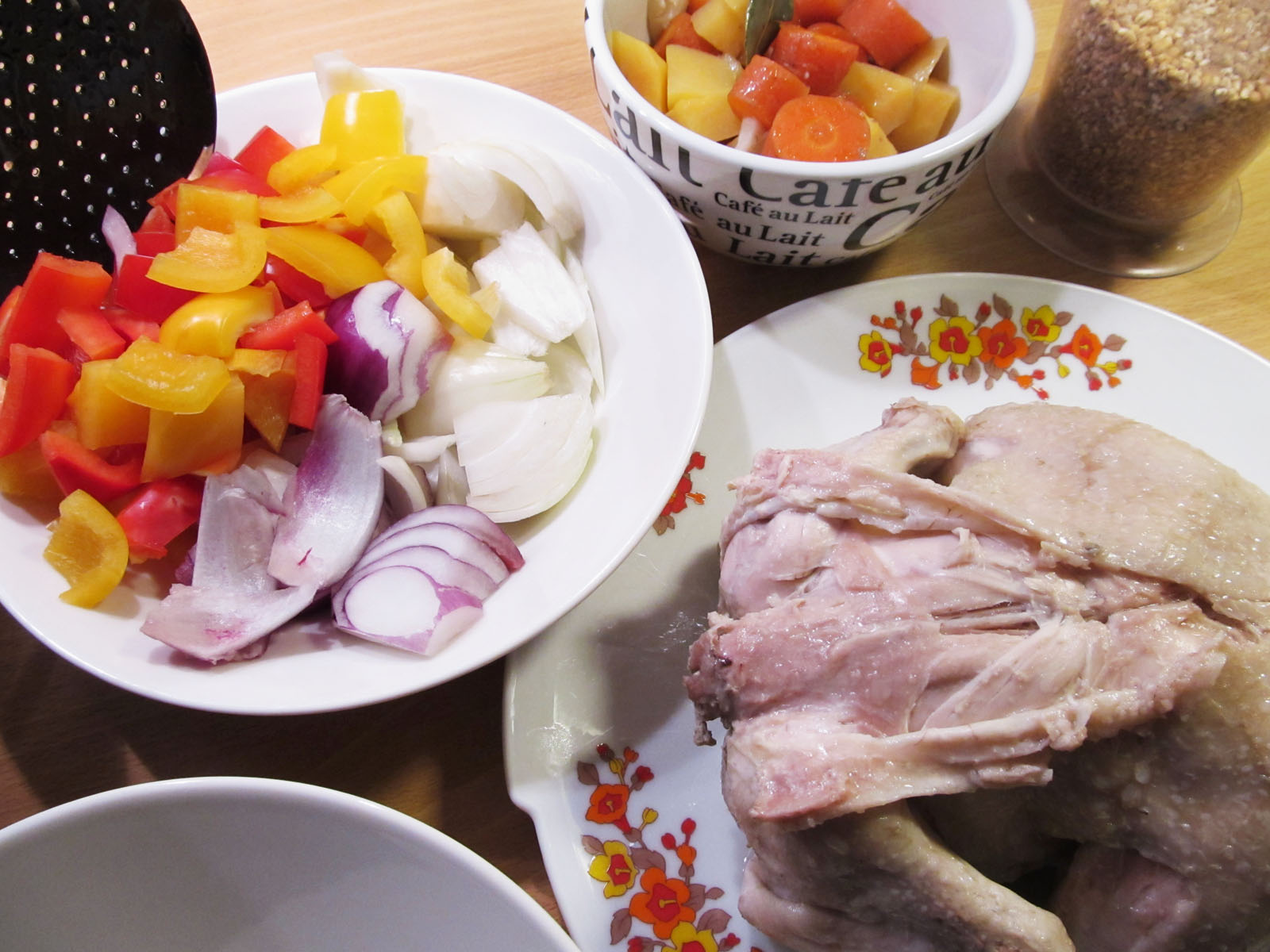
Lukuisten onnistuneiden makukokemusten rohkaisemana päätin tänään tarttua härkää sarvista ja valmistaa broileripaistosta vanhan ajan reseptin mukaan. Ostin siis kokonaisen broilerin ja pyrin vajavaisilla keittiövarustuksillani valmistamaan siitä mahdollisimman herkullista. Ja tulos olikin maittavaa, joskin valmistus oli tasoiselleni kotikokille hieman haastavaa. Kokonaisen broilerin keittäminen vaatii hyvin suuren kattilan, sillä nestettä tulee käyttää runsaasti ja liemeen kuuluu lisätä kiehumisvaiheessa myös juureksia. Vaikka käytin suurinta kattilaamme, tuppasi keitos pulppuamaan täyden lastin vuoksi yli ja sain vahtia kiehumista vähän väliä hellan ääressä. Sehän juuri ei kuulu ideaan, vaan ruoan olisi tarkoitus olla vaivatonta ja miellyttävää valmistaa!


Broileripaistos:

1 kokonainen broileri
3 l vettä
2 tl suolaa
1 laakerinlehti
1 nauris
4 porkkanaa
5 valkosipulin kynttä
2–3 sipulia
2 paprikaa
3–4 dl esikypsennettyjä ohrasuurimoita tai riisiä

Ota broileri lämpenemään huoneenlämpöön noin puoli tuntia ennen kypsentämistä.  Laita se suureen kattilaan kylmän veden ja suolan kera. Vettä tulisi olla sen verran, että se kunnolla peittää broilerin. Kun vesi alkaa kiehua, kuori reikäkauhalla pinnalle muodostuva vaahto ja lisää joukkoon paloitellut juurekset ja puolitetut valkosipulin kynnet. Lisää muut kasvikset vasta keittämisen loppuvaiheessa. Keitä kypsäksi (noin 45 minuuttia). Poimi sitten reikäkauhaa apuna käyttäen kasvikset erilleen ja nosta broileri kattilasta. Ota keitinliemi talteen ja anna broilerin jäähtyä hetki. Erottele lihat luista ja paloittele sopivan kokoisiksi paloiksi. Keitä luista ja muista tähteistä vielä jälkiliemi. Kerrosta suureen uunivuokaan tai pataan ainekset siten, että alimmaiseksi ja päällimmäiseksi tulee ohraryynejä. Kaada joukkoon keitinlientä niin, että ainekset peittyvät. Anna hautua kannen alla 175-asteisessa uunissa noin 45 minuuttia.


Perinteisessä reseptissä oli käytetty porkkanan lisäksi palsternakkaa ja purjoa, mutta koska minulla sattui kaapissani olemaan edelleen nauriita ja pari paprikaa sekä vanhaa sipulia, halusin hyödyntää ne. Useissa kanapaistoksissa on käytetty myös mm. tomaattia, ja jotenkin muistelisin että jopa omena sopii pataan mainiosti. Nykyaikaisemmissa resepteissä revitellään itämaisilla mausteilla, mutta koska apunani olleessa vanhassa reseptissä oli mainittu pelkästään suola, halusin kokeilla, millaisen tuloksen saan.


Kanahan on nykyisessä ruuanlaitossa Suomessa jo melkoinen harvinaisuus. Kaupasta ostettava kananliha on broileria, joka on siis erityisesti lihatuotantoon jalostettu kanarotujen risteytys. Suomalainen broileri tuotetaan Skotlannista tuotujen Ross-rotuisten broilerien jälkeläisistä. Teurastusvaiheessa linnut ovat iältään muutaman päivän yli kuukauden. Katsellessani kaupasta tuomaani suojakaasuun pakattua lintua huokaisin. En voinut olla ajattelematta tuon pienen eläimen lyhyttä elämää, joka päätyi lopulta minun keittiööni. Ajatellessani tuota elämää minulle tuli yhä merkittävämmäksi käyttää ostamani liha mahdollisimman tarkkaan hyödyksi. Valmistin ruuan mahdollisimman huolellisesti, haistelin keitoksen herkullista tuoksua ja kuuntelin vasta kypsennetyn broilerin hiljaista tirinää. Riivin lihat luista sormin, jolloin löysin helposti kaikki mahdolliset lihan palat ja sain erotelluksi ne tarkkaan jänteistä ja luista. Jälkiliemen keittämällä käytin broilerista kaiken sen maun, jonka vain mahdollisesti siitä voi irti saada. Yli jäävän jälkiliemenhän voi pakastaa ja käyttää myöhemmin ruuanlaitossa makua antamaan. Näin uskon hyödyntäneeni lihan niin monin tavoin kuin suinkin voin: nautin siitä niin raaka-aineena kuin aistimuksinakin täysin tehoin.


MARGINAALISSA:
Missäköhän määrin valmiiksi tuotettujen siipikarjatuotteiden raaka-aineet hyödynnetään? Kuinka paljon tulee hukkaa tuotantolaitoksessa, jossa eläimestä tulee tuote? Tarkoitan esimerkiksi Hornet-siipipaloja, koipireisiä, rintafileitä, fileesuikaleita ja muita broilerituotteita. Esimerkiksi joihinkin broilerinugetteihin käytetään käsitykseni mukaan massaksi jauhettua broileria, joten luulisi, että ainakin siinä raaka-aine tulee hyödynnettyä melko tarkkaan. Toisaalta, vaikka erilaisia broilerituotteita on pilvin pimein, joissa kussakin käytetään broilerin eri osia ja voisi ajatella että yhdestä tuotteesta yli jäävät osat luonnollisesti hyödynnetään toisessa tuotteessa, en nykyisellään enää uskalla uskoa siihen. Kuultuani, että myös munatuotannon kanat ovat kevyiksi jalostettuja hybridejä ja toisekseen puolet linnuista (eli kukot, joista ei munantuotannossa ole hyötyä) eliminoidaan täysin turhina, olen melko lailla pitänyt koko siipikarjan ruoanjalostusketjua aika järjenvastaisena. Siksipä pyrin vastaisuudessa kiinnittämään enemmän huomiota siihen, kuinka usein ja millä tavoin kyseisiä tuotteita ruoanvalmistuksessa hyödynnän.

*  *  *


After many successful trials in cooking, I had gotten courageous enough to try out a bit more difficult a dish; an old style Chicken Stew. The tricky part for me was, that I bought a whole broiler, which I haven’t prepared more than once in my life. With the insufficient equipment in our kitchen, I tried to cook as delicious dinner as I ever could. The final result was tasty indeed, but it took quite a lot of time and effort for me, the New Beginner. When cooking a whole broiler in a big amount of water and also some veggies, a large kettle is required, preferably a larger one that I happen to have. Even though I used the biggest one we have, as it was stuffed full, the water tended to boil over and I had to keep an eye on it. And that’s not the idea, Chicken Stew should be easy and effortless to prepare!


Chicken Stew:

1 whole broiler
3 l (6 pt) water
2 tsp. salt
1 laurel leaf
1 turnip
4 carrots
5 cloves of garlic
2–3 onions
2 sweet peppers
3–4 dl (1–2 cups) pre-cooked barley groats or rice

Take the broiler into room temperature about half an hour before cooking it. Put it in a large kettle with cold water and salt. There should be enough water to completely cover the broiler. When water starts to boil, peel the foam forming on the surface, for example with a hole ladle. Add the chopped root vegetables and halved garlic. Add the rest of the veggies a bit later. Cook for about 45 minutes, until well done. Pick out the vegetables and lift the broiler to cool off on a cutting board. Pour consommé in a separate container to wait. Separate flesh from bones and chop them into a bit smaller pieces. Add water to the bones and other leftovers and cook another consommé to use later on. In a large oven tray, layer the ingredients so that barley groats are on the bottom and also on top. Add consommé as much as is needed to cover up the other ingredients. Let the stew simmer for about 45 minutes in 175 C / 350 F.


In the traditional recipe I used, there were carrots, parsnips and leak, but as I happened to have some turnips, a couple of sweet peppers and old onions in the fridge, I decided to use them. In may Chicken Stews there seem to be also tomato, and if I remember correctly, also apple is a great ingredient with chicken. In modern recipes people use a lot of Asian spices, but I wanted to keep it simple, as it was in the old days, and I only used salt and one laurel leaf.


At least in Finland real chicken is rarely used in cooking nowadays. The chicken meat that is in grocery stores is broiler that is specially bread for meat production by combining different species of chicken. The Finnish broiler is brought from Scotland and they’re descendants from Ross broilers. When butchered, the fowl is only a bit over 30 days old. As I watched the bird I had brought home from the store, packed in shielding gas, I couldn’t help but sigh. I thought about the short life of that little animal, a life that ended up in my kitchen. As I thought about that, it became even more important to me to use the meat as meticulously as I could. I prepared the dish carefully, smelled the delicious scent coming from the kettle as the meat simmered, and listened to it sizzling on the cutting board. I separated the meat from bones with hands, and that way it was very easy to find all of the juicy parts. By boiling another consommé from the leftovers I was able to squeeze out all the taste there was left in the meat. The second consommé can then be frozen for later use. This way I believe I utilized the meat as well as I ever could have: I enjoyed it as an ingredient, but also through different sensations.


OVER THE EDGE:
I wonder how carefully raw material is used in food industry? How much is thrown away on a production line that turns animals into products? I mean the spicy chicken wings (called Hornets), legs, breast stripes, ready-sliced fillets and other products made from broiler. Well, some nuggets I think are made from minced broiler (more like mash), so maybe the material is well utilized there? On the other hand, there are many and many more products that use a special part of the birds, and where one might think the leftovers are then good material for the other products using different parts, it probably isn’t that simple. At least I can’t believe it would be that simple, anyway. After hearing that also the birds used for laying eggs are lightweight hybrids and that half of the birds are eliminated useless (the roosters, that is), I have considered the whole poultry industry pretty irrational. That’s why I’ll try to pay more attention to how often and in what way I will be using this kind of ingredients.